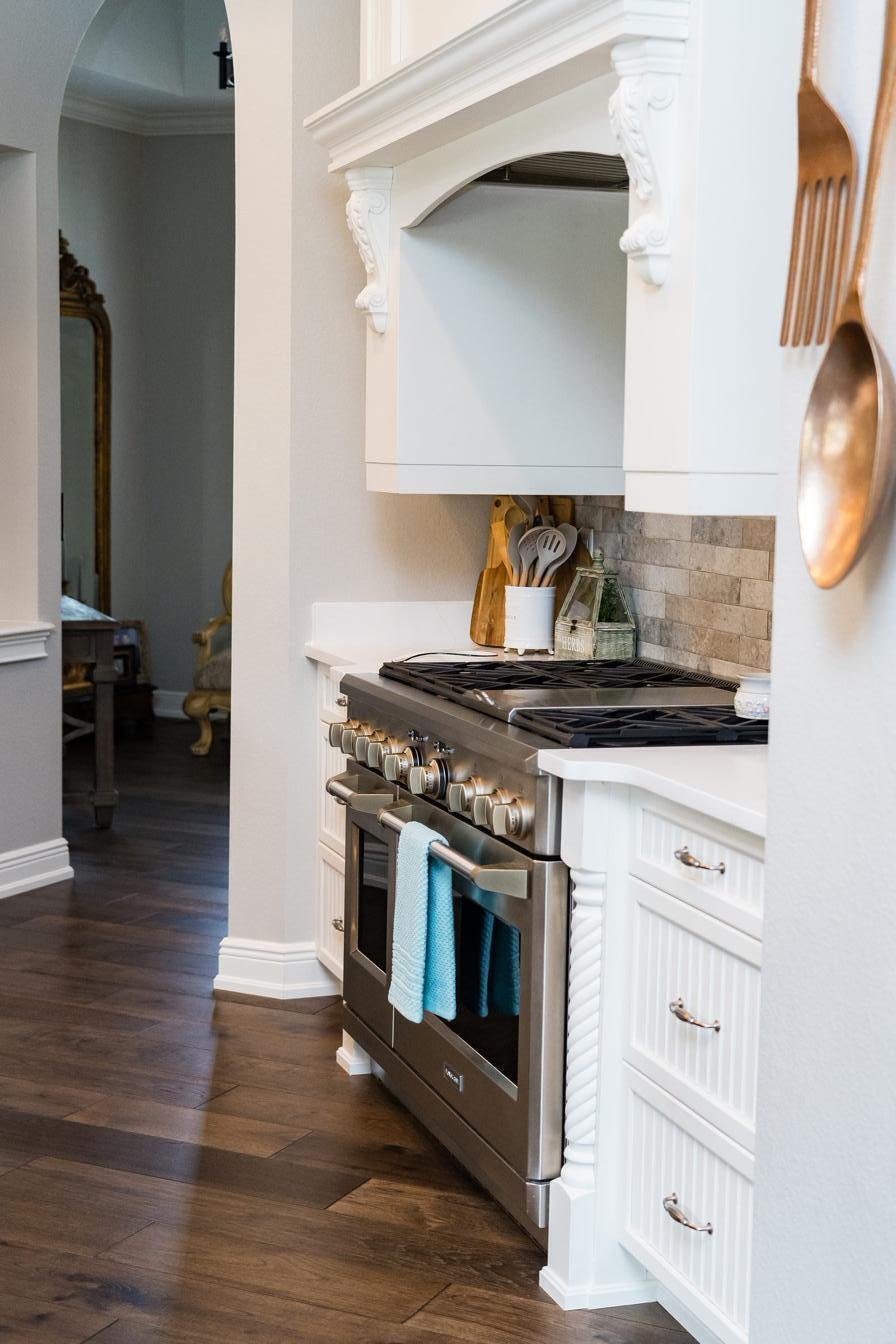
Use pulls on drawers and knobs or pulls on doors — both work. Brushed gold and matte black are the most popular finishes right now. Size matters more than most people expect: bar pulls 3–5 inches for smaller drawers, 8–12 inches for large lower drawers. Choose your hardware before finalizing your cabinet order so everything coordinates from the start.
Hardware is the jewelry of a kitchen or bathroom — small, detail-oriented, and surprisingly impactful on the overall feel of a space. A beautiful cabinet suite with the wrong hardware can look off; the right hardware can elevate an otherwise understated kitchen into something that feels genuinely considered and complete.
It's also one of the most cost-effective ways to refresh a kitchen or bathroom if you're not doing a full remodel. A hardware swap — keeping your existing cabinets and just replacing pulls and knobs — can meaningfully transform how a kitchen looks and feels at a fraction of the cost of new cabinetry.
Here's what to know before you decide.
Knobs vs. Pulls: What's the Difference and When to Use Each?
Cabinet Knobs
Knobs are single-point hardware — they attach with one screw. They work well on cabinet doors and offer a clean, simple look. Round knobs read as more traditional; square or geometric knobs lean modern. They're generally less expensive than pulls and take less time to install.
The main drawback of knobs is ergonomics. On heavy doors, a knob can put more strain on the wrist than a pull. On wide drawers, a single central knob can feel unbalanced and is harder to open with one smooth motion.
Cabinet Pulls
Pulls (also called bar pulls or handles) attach with two screws and offer a more substantial grip. They're generally better for drawers — especially wider drawers — because they distribute the pulling motion across the hand more naturally. Long bar pulls (8–12 inches) on deep drawers are a particularly popular current look.
Pulls can range from simple, minimal bar shapes to more ornate cup pulls or bin pulls. The style you choose should relate to the overall design direction of the space.
A Common Combination
Many kitchens use knobs on doors and pulls on drawers. This hybrid approach is practical — pulls are better for drawers, and knobs read as cleaner on doors. If you go this route, make sure the finish and general style family match between the two.
"Hardware is one of the few elements where you can be bolder than you think. A stunning pull on a simple white cabinet does more for a kitchen's personality than almost anything else at that price point."
Choosing a Finish
Hardware finish is as important as the shape. Here's a practical breakdown of the most common finishes and what they work with.
Brushed Gold / Satin Brass
Warm, sophisticated, and currently very popular. Works beautifully with white, cream, warm gray, and navy cabinets. Develops a living patina over time. More forgiving of fingerprints than polished finishes.
Brushed Nickel / Satin Chrome
Clean, versatile, and long-lasting in popularity. Works across almost any cabinet color. Slightly cooler tone than brass. Very forgiving of fingerprints and smudges.
Matte Black
Bold, graphic, and modern. Works well with white, gray, or light-colored cabinets for strong contrast. Also works with dark cabinets for a tonal, monochromatic look. Can show dust, so consider placement.
Unlacquered Brass
Develops a distinctive natural patina over time — different from brushed brass, which is coated to resist tarnishing. Loved by design enthusiasts for its living, evolving quality. Pairs beautifully with warm wood tones and cream or sage cabinets.
The Rules — And When to Break Them
Match finishes to other metals in the space
Ideally, your hardware finish relates to the other metal tones in the room — faucets, light fixtures, appliance handles. You don't have to be exact, but significant clashes feel accidental rather than intentional.
Mixed metals can work — but be intentional
Two metals in a space is a decision; three or more is a problem. If you want to mix (say, brushed nickel fixtures with brushed gold hardware), make sure each choice appears more than once so it reads as a pattern rather than an accident.
Scale hardware to the cabinet
Small knobs on large cabinet doors look lost. Oversized pulls on a small bathroom vanity can look heavy. As a rule: the larger the cabinet or drawer face, the more substantial the hardware should be.
Consider how hardware reads in your specific light
Florida's bright, warm light flatters different finishes than the cooler northern light you'll see in most design publications and social media. Warm gold tones read particularly well here. Whenever possible, bring a sample home before committing to a full order.
The Easiest Upgrade You're Not Doing
If you're happy with your existing cabinets but your kitchen feels dated, a hardware swap is one of the highest-return-on-investment updates you can make. Depending on the number of cabinets, a full hardware replacement typically costs $300–$1,000 in hardware plus a few hours of installation — and the visual impact is often dramatic.
If you're doing a full cabinet installation with us, we'll walk through hardware options during your design consultation and can order through our supplier network. We're happy to provide samples to take home so you can see how finishes look in your actual kitchen light.
See Hardware Options in Person
Our design team can walk you through hardware finishes, sizes, and styles — and help you find the combination that ties your kitchen together.
Schedule a Consultation Kitchen ServicesCommon Questions About Cabinet Hardware
Knobs or pulls — which should I use?
Both work. Pulls are more ergonomic on drawers; knobs work well on doors. The most common approach is pulls on all drawers and knobs or pulls on doors for a consistent look. Going all-pulls throughout is a cleaner, more modern choice that's increasingly common. What matters most is that the size and finish coordinate with your cabinet style.
What hardware finish is most popular right now?
Brushed gold and unlacquered brass lead in Tampa Bay kitchens right now, followed by matte black for more modern or transitional styles. Mixed metals — brass pulls with brushed nickel faucets, for example — are becoming more accepted. Polished chrome and satin nickel are still solid choices for a cleaner, more traditional look that ages well.
What size pull should I buy for my drawers?
A practical guide: 3–4 inch pulls for smaller doors and narrow drawers, 5–6 inch for standard drawers, 8–12 inch bar pulls for large lower drawers and base cabinets. Longer pulls on lower cabinets are one of the most affordable upgrades that makes a noticeable difference. Bring your cabinet measurements when you visit our Holiday showroom and we'll help you pick the right sizing.
Can I update hardware without replacing my cabinets?
Yes — and it's worth doing if your cabinet boxes are in good condition. A hardware swap changes the look and feel of a kitchen more than most people expect. The main consideration: new hardware needs to align with your existing screw hole spacing, or you'll need to fill and redrill. Stop by our showroom and bring photos of your existing cabinets — we can help you figure out what works.