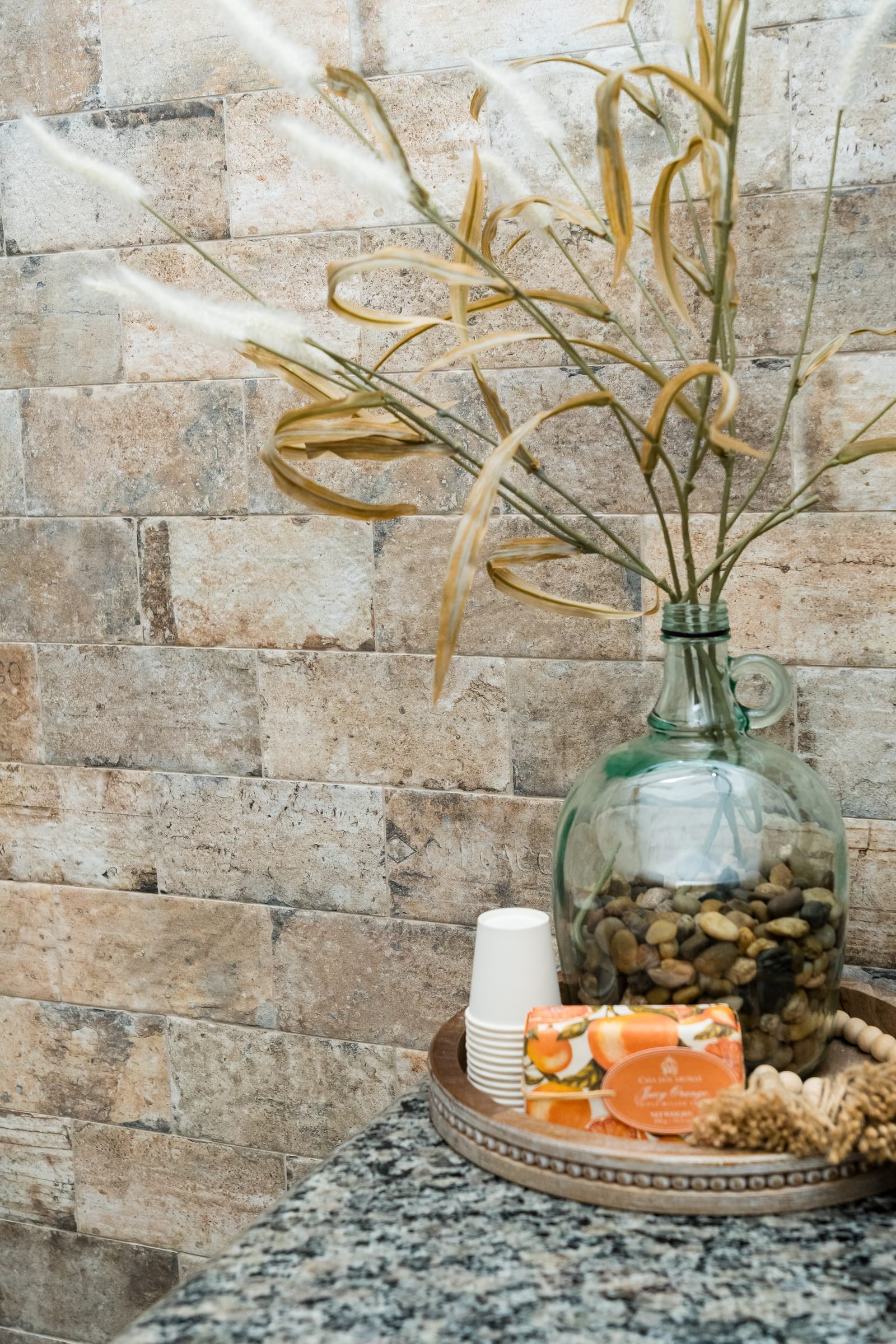
Quartz is lower maintenance — it's non-porous, never needs sealing, and resists staining well. Granite is natural stone with more character and better heat resistance, but it needs periodic sealing. For most Tampa Bay households, quartz is the practical choice. If you love the look of natural stone and don't mind light upkeep, granite is a great option too.
It's the most common countertop question we hear at our Holiday showroom: quartz or granite? Both materials are genuinely beautiful and will last for decades in the right home. But they have real differences that matter in everyday use — especially in Florida kitchens where heat, humidity, and busy households are all part of the picture.
Here's an honest breakdown. No fluff, no upselling — just what we've seen work in real kitchens across Tampa Bay.
What Are They, Exactly?
Granite is quarried natural stone. Every slab is unique — the veining, color, and pattern are the result of minerals formed over millions of years. No two granite slabs are identical, which is part of the appeal.
Quartz countertops are engineered stone — typically 90–95% ground quartz mineral bound with polymer resins. Because they're manufactured, they can be produced in consistent colors and patterns, including convincing marble-look designs. Brands you may have seen include Cambria, Silestone, and MSI.
Quartz is our most-requested countertop material by a wide margin. That said, granite has a loyal following among homeowners who want something natural and one-of-a-kind — and for good reason.
Side-by-Side Comparison
| Factor | Quartz | Granite |
|---|---|---|
| Maintenance | ✓ No sealing needed. Clean with soap and water. | Needs sealing once a year or every few years depending on the stone. |
| Stain Resistance | ✓ Non-porous — liquids won't absorb. | Porous without sealing — oils and acids can stain if the surface isn't sealed. |
| Heat Resistance | Moderate — resin binders can discolor under extreme direct heat. Use trivets. | ✓ Better — natural stone handles heat well, though trivets are still smart. |
| Durability | ✓ Very hard and scratch-resistant. Consistent throughout the slab. | Very hard — though some granite varieties are slightly more porous or prone to chipping at edges. |
| Appearance | Consistent, controlled patterns. Easy to match across multiple slabs or seams. | ✓ Unique — no two slabs identical. More natural movement and variation. |
| Cost (installed) | $75–$130+ per sq ft, depending on material and edge profile. | $60–$110+ per sq ft. Exotic granites can exceed quartz pricing. |
| Best For | Busy households, families with kids, anyone who wants low maintenance. | Homeowners who love natural stone, want something unique, and are comfortable with periodic sealing. |
The Maintenance Question
This is where the clearest real-world difference shows up. Quartz is non-porous, so it won't absorb liquids, bacteria, or staining agents. Wipe it with mild soap and water and you're done. No sealers, no annual products, nothing else to remember.
Granite is a natural porous stone and needs to be sealed periodically — how often depends on the specific granite, but once a year is a reasonable baseline. A properly sealed granite countertop is quite stain-resistant. But if sealing gets skipped, oils, acids like lemon juice, and liquids like red wine can leave marks over time.
For households with kids, serious home cooks, or anyone who doesn't want to think about countertop upkeep, quartz typically wins here.
"If you love the look of marble but want something that requires zero maintenance, today's marble-look quartz options are genuinely impressive. Come see them in person at our showroom — photos don't do them justice."
The Heat Question
Granite handles direct heat better than quartz. Natural stone can generally tolerate a hot pan set directly on it without issue. Quartz, because it contains polymer resins, can potentially discolor or crack under sudden, direct high heat — a cast iron skillet straight from a very hot oven, for example.
In practice, most kitchen designers recommend using trivets regardless of countertop material, so this difference matters less in daily use. But if you regularly set hot pots directly on your counters, granite has the advantage.
Appearance: Natural vs. Engineered
Granite is genuinely one-of-a-kind. The patterns, color movement, and variation in a natural slab can't be replicated exactly in any engineered product. For a lot of homeowners, that uniqueness is the whole point — your countertop doesn't look like anyone else's.
Quartz offers consistency and control. If you're doing a large kitchen with multiple slabs, quartz can be matched much more seamlessly at seam lines. And the marble-look options available today — particularly Calacatta and Carrara-style quartz — are significantly better than they were even a few years ago.
Our Honest Take
For most Tampa Bay households, we lean toward quartz — it holds up well in Florida's climate, requires no maintenance, and comes in styles that work with almost any kitchen design. But if you're drawn to natural stone and like the idea of something with real character and a one-of-a-kind look, granite is a proven material that's been working well in homes for generations. The best way to decide is to see both side by side. Stop by our Holiday showroom and we'll pull out samples that match your kitchen's direction — no pressure, just a real look at your options.
Samples, Sourcing, and What to Expect
We carry quartz samples in our 14,000 sq ft Holiday showroom so you can see colors and finishes in person before anything is ordered. For granite, quartzite, and other natural stones, we work with quality stone yards in the area — they carry a much wider selection of slabs than any single showroom can hold, and we'll help you pick through them.
Once you've selected your material, our team handles measuring and installation. We use our own installers for the majority of projects, though on occasion we bring in additional qualified help depending on scheduling and scope. Either way, we manage the job from selection through completion.
Visit Our Countertop Showroom in Holiday, FL
3312 Grand Blvd Suite A, Holiday, FL 34690 — serving Pasco, Pinellas, Hernando, and Hillsborough counties. Call (727) 849-3388 or schedule online.
Schedule a Free In-Home Measurement See Countertop OptionsCommon Questions
Does quartz need to be sealed?
No. Quartz is engineered with resins that make it non-porous, so sealing is never required. Clean it with mild soap and water — that's it. This is one of the main reasons it's so popular with Tampa Bay homeowners who want low-maintenance countertops.
Can you put hot pans directly on quartz?
Not recommended. Quartz can handle brief, moderate heat contact, but extreme heat — like a cast iron skillet straight from a high oven — can damage the resin binders and cause discoloration or cracking. Always use a trivet or hot pad. Granite handles direct heat better.
How much does countertop installation cost in the Holiday, FL area?
Quartz typically runs $75–$130+ per square foot installed in the Tampa Bay area, depending on the material and edge profile. Granite runs slightly less for common varieties, though exotic granites can push past quartz pricing. A standard kitchen with 40–50 square feet commonly falls in the $3,500–$6,500 range. The best way to get an accurate number is an in-home measurement — call (727) 849-3388 to schedule.
Do you carry quartz and granite slabs in your showroom?
We carry samples of quartz, granite, quartzite, and other materials in our Holiday showroom so you can see finishes and colors in person. For full slab selection — especially for granite and natural stone — we work with quality stone yards in the area that carry a wide inventory. We'll take you through the options and help you choose something that fits your kitchen and budget.
Which countertop material holds up better in Florida's heat and humidity?
Both quartz and granite hold up well in Florida's climate. Quartz has the edge in humidity resistance since it's non-porous and won't absorb moisture. Granite performs well too as long as it's properly sealed. What Florida homeowners should avoid is unsealed granite or lower-quality engineered stone — those are more likely to show wear over time.