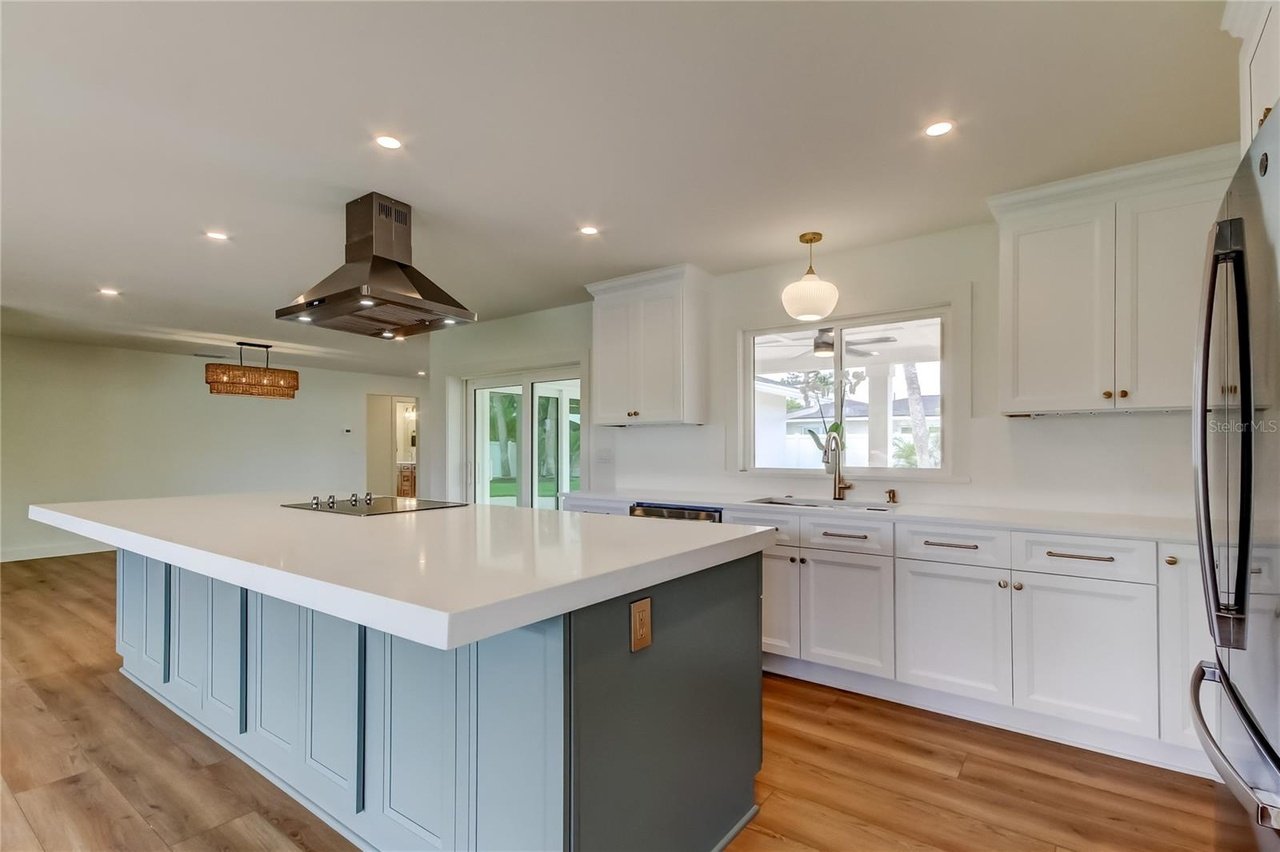
For Florida's climate, choose plywood-box cabinet construction with a moisture-resistant finish — avoid particleboard boxes and thermofoil doors, which can fail in heat and humidity. For countertops, quartz is the most practical choice: non-porous, no sealing required, and holds up well year-round. Granite and quartzite work well too when properly sealed. Avoid marble in high-use kitchens — it's beautiful but stains easily.
Florida is not like the rest of the country when it comes to home materials. The combination of heat, intense UV exposure, high humidity, and for many homeowners in Pasco and Pinellas County, proximity to salt air — creates conditions that accelerate the wear of materials that perform perfectly well in drier, cooler climates.
After more than 55 years of designing and installing kitchens and bathrooms in the Tampa Bay area, we have clear opinions on what holds up and what doesn't. This is our honest assessment.
Cabinet Materials: What Performs in Florida
Solid Wood Doors with Plywood Box Construction
All-wood construction — solid wood door frames and panels, plywood box — is our top recommendation for Florida kitchens. Solid wood and quality plywood expand and contract with humidity changes, but they do so predictably and don't delaminate. A well-made solid wood cabinet with a durable finish will outlast most other options in a Florida environment.
This is exactly what we carry: cabinets featuring all wood doors and solid wood construction, which we've recommended to thousands of homeowners across Tampa Bay. The cabinet lines we partner with are specifically chosen for quality that holds up over time.
Thermofoil / Foil-Wrapped Cabinets
Thermofoil cabinets — MDF cores wrapped with a vinyl film — are common in budget kitchens and offer a smooth, easy-to-clean surface. In moderate climates, they perform reasonably well. In Florida, however, the combination of heat and humidity can cause the foil to peel away from the MDF substrate over time, particularly on cabinets near dishwashers, ranges, or south-facing windows that receive significant direct sun.
If budget requires a lower cost cabinet option, thermofoil can work in climate-controlled spaces away from direct heat sources. But for longevity in Florida conditions, solid wood construction is a better investment.
Painted vs. Stained Cabinet Finishes
Both painted and stained wood finishes perform well in Florida when applied to quality wood cabinetry. Stained finishes tend to show wear more gracefully — as they age, they develop character rather than showing obvious chips or nicks. Painted finishes offer a cleaner, crisper look that's very popular right now, but quality of paint and application matters significantly for durability in humid conditions.
We recommend factory-painted or professionally painted cabinets with a durable catalyzed finish — these hold up far better than field-painted cabinetry in Florida humidity.
Countertop Materials: Our Florida Rankings
Quartz
Quartz is our top countertop recommendation for most Florida homeowners. It's non-porous (won't absorb moisture, mold, or bacteria), extremely durable, and requires zero sealing. The consistency of engineered quartz means it performs predictably regardless of where it's installed. The main limitation is heat resistance — avoid placing very hot pots directly on the surface.
Granite
Granite is a time-tested, beautiful natural stone that performs very well in Florida when properly maintained. Its heat resistance is superior to quartz, and its natural variation gives each installation a one-of-a-kind character. The key in Florida's humid environment is consistent sealing — a sealed granite resists moisture effectively. An unsealed or under-maintained granite can be prone to staining and, over time, moisture penetration.
Quartzite
Often confused with quartz (they're completely different), quartzite is a natural metamorphic stone that's extremely hard and dense. It handles heat beautifully, offers dramatic natural veining that rivals marble, and — when properly sealed — is highly durable. The look of quartzite is genuinely stunning in Florida's light. Maintenance requirements are similar to granite.
Marble
Marble is gorgeous and brings a timeless luxury to any kitchen or bathroom. But it's also porous, prone to etching from acidic substances (lemon juice, tomato sauce, wine), and requires diligent sealing and maintenance. In Florida's humid environment, an under-maintained marble surface can develop issues more quickly than in drier climates. We typically recommend marble for bathrooms and spaces where etching from kitchen use isn't a concern. If you love marble in the kitchen, go in with realistic expectations about patina and maintenance.
Materials to Approach with Caution in Florida
Laminate countertops can delaminate at seams in high-moisture environments. Butcher block requires significant maintenance (oiling, sealing) to resist Florida humidity and is susceptible to mold in high-moisture areas. Tile countertops with many grout lines are difficult to keep clean and hygienic in a kitchen environment. None of these are impossible choices in Florida — but they require more maintenance than stone alternatives to perform well long-term.
Hardware Finishes in Coastal Environments
For homes within a few miles of the coast, hardware finish choice matters more than most people realize. Salt air accelerates corrosion in lower-quality metal finishes.
- PVD-coated finishes (physical vapor deposition) are the most durable option for coastal environments — extremely resistant to salt, moisture, and wear. Many premium brushed gold and matte black finishes use PVD coating.
- Solid brass hardware (unlacquered or lacquered) performs well in coastal settings and develops a beautiful patina.
- Avoid cheap chrome plating near the coast — it tends to pit and corrode relatively quickly in salt-air conditions.
The Bottom Line
Florida's climate rewards materials chosen with it in mind, and punishes ones that aren't. The good news is that the best-performing materials in our climate — solid wood cabinetry, quartz or well-maintained natural stone countertops, quality hardware — are also beautiful choices that will serve you and your family for decades.
Our team has been helping Tampa Bay homeowners navigate exactly these decisions since 1968. When we come out for a free in-home measurement, we can give you an honest assessment of what will hold up in your specific location and how you use your space — not just what looks good in a brochure.
Get Florida-Smart Material Advice
Our team understands what holds up in Tampa Bay's climate. Visit our showroom in Holiday, FL for honest, expert guidance on materials that are right for your home.
Schedule a Free In-Home Measurement See Our CountertopsCommon Questions About Materials for Florida Homes
What should I look for in cabinet construction for a Florida home?
Plywood box construction is the most important spec to look for — it handles humidity significantly better than particleboard over time. For door finishes, avoid lower-quality thermofoil, which can peel and delaminate in Florida's heat. Solid wood doors with a quality painted or stained finish, or painted MDF doors, are reliable choices. Ask about box construction specifically when you're comparing cabinet lines — it's a detail that matters a lot and isn't always visible on the surface.
Which countertop material holds up best in Florida's climate?
Quartz is our most practical recommendation for Florida homes — it's non-porous, never needs sealing, and isn't affected by humidity. Granite and quartzite are also excellent when properly maintained, though they need periodic sealing. Marble is beautiful but requires more care and is more susceptible to staining and etching in an active kitchen. Laminate has improved significantly and performs fine in most Florida applications at a lower price point.
Do I need to seal granite countertops more often in Florida because of the humidity?
Yes — Florida's humidity makes regular sealing more important for granite than in drier climates. Once a year is a reasonable schedule for most granites. Some denser granites may need it less often; more porous varieties may need it more. We can give you specific guidance based on the granite you select. Quartz avoids this entirely since it's non-porous.
Can I use outdoor kitchen materials inside in Florida?
Marine-grade finishes and materials rated for outdoor use can work inside, but they're generally not necessary for interior applications when you choose the right materials from the start. For Florida homes specifically, the focus should be on moisture-resistant cabinet construction and a countertop material that doesn't need constant maintenance — quartz and properly sealed granite both fit that description well.