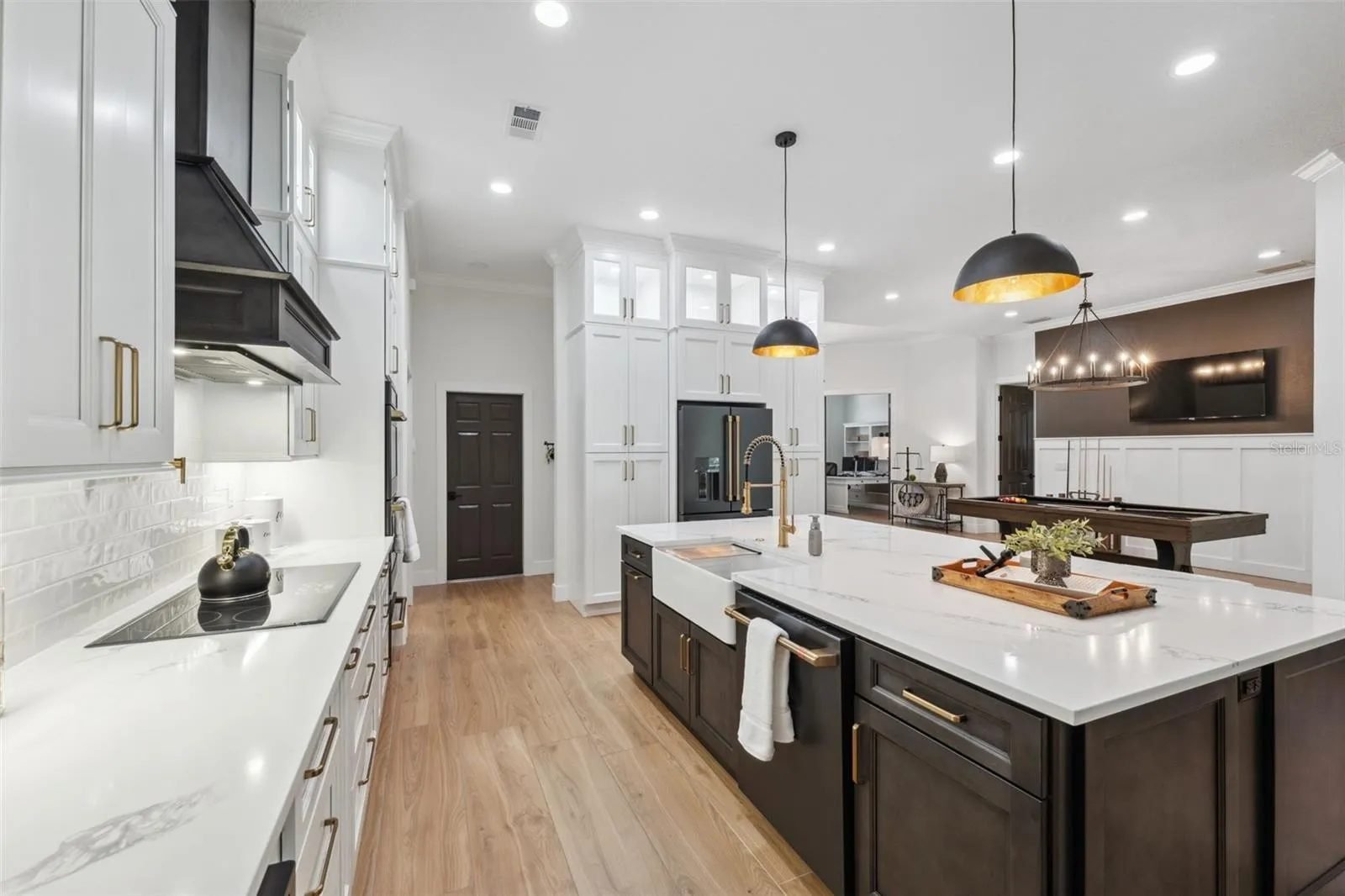
Start with box construction — plywood beats particleboard for durability, especially in Florida. Then choose a door style (Shaker is the most versatile), a finish (painted, stained, or two-tone), and hardware last. Don't finalize hardware until you can hold samples next to your cabinet door in real light. Visit a showroom before you order anything — photos and samples look very different once they're in your actual space.
Choosing kitchen cabinets is one of the bigger decisions in a kitchen project — they cover most of the wall space, set the visual tone of the room, and need to hold up for 15 to 30 years. Get them right and you'll barely think about them. Get them wrong and you'll notice every time you walk into your kitchen.
After decades of designing and installing kitchens across Pasco and Pinellas counties, we've developed some clear opinions on what matters. Here's what we tell homeowners who come into our showroom not knowing where to start.
Start with Construction, Not Style
Most homeowners start with door style — what does it look like? That's understandable, but it's the wrong starting point. What your cabinets are made of determines how long they last. What they look like is easier to change your mind about.
The most important construction question is: plywood or particleboard?
Particleboard (and MDF) cabinet boxes are cheaper to manufacture and widely used — even by brands that charge premium prices. The problem in Florida specifically is moisture. Particleboard absorbs humidity, swells, and degrades over time. Hinges and hardware pull out. Drawer bottoms sag. We've seen cabinets fail in under 10 years in Florida kitchens because the boxes couldn't handle the climate.
High-quality plywood boxes hold up in this environment. For doors, match the material to the finish: painted MDF or HDF doors stay stable and resist paint cracking at the joints, while stained doors usually use a solid wood frame to show the grain. They cost more upfront than particleboard, but the total cost over 20 years is lower because you're not replacing them. Specs vary by manufacturer and collection, and the lines we carry are chosen for quality construction that holds up in Florida's climate.
"In Florida's climate, the box is more important than the door. A beautiful door on a particleboard box will look great for three years and start falling apart in five."
Door Styles: What the Options Actually Mean
Once you've settled on construction, door style is the next decision. There are more options than most people expect, but the field narrows quickly once you know what you're working with.
Shaker
Five-piece door with a flat center panel and square edges. The most popular style by a wide margin — works in traditional, transitional, and modern kitchens. Clean lines without feeling cold. Hard to go wrong with Shaker.
Raised Panel
A center panel that's raised above the frame — more visual detail and depth. Traditional and formal. Common in older Tampa Bay homes and works well when you want a classic, furniture-like look.
Inset
The door sits inside the cabinet frame rather than overlaying it. The most precise and refined look — more expensive because it requires tighter tolerances. Popular in high-end and custom kitchens.
Flat / Slab
A single flat panel with no frame detail. Clean and contemporary. Works best in modern, minimalist kitchens. Fingerprints and surface wear are more visible, so finish and material quality matter more here.
Our recommendation for most homeowners in Pasco and Pinellas counties: start with Shaker. It's the style most likely to look as good in 20 years as it does the day it's installed, and it works with nearly any countertop material, hardware, or paint color you might choose down the road.
Finishes: Painted, Stained, or Two-Tone
This is where personal preference takes over — but a few practical points are worth knowing before you decide.
Painted cabinets
White, off-white, gray, navy, sage green — painted cabinets are clean, bright, and the dominant choice in Florida homes right now. They're easier to keep looking cohesive with countertops and backsplash. The tradeoff: paint can chip or wear over time, particularly on high-use areas like door edges. Quality of the paint finish matters, and it's worth asking about the topcoat used.
Stained cabinets
Stain lets the natural wood grain show through. Warm maple, rich walnut, and mid-tone oak all have a quality and depth that painted cabinets don't replicate. Stained cabinets tend to show less wear at edges because you're not going through a surface layer to bare wood. They're coming back in popularity after years of all-white kitchens dominating.
Two-tone
A different color or finish on the island or lower cabinets than the uppers. Done well, it adds depth and visual interest. Done poorly, it looks like an afterthought. The key is choosing tones that are actually complementary — not just different. We help homeowners work through two-tone combinations in the showroom, where you can see how things actually look together rather than guessing from a photo.
Hardware: Don't Decide Last
Pulls and knobs are often treated as an afterthought — chosen after everything else is locked in. This is a mistake. Hardware has more influence on the final look of your kitchen than most people expect, and it's much easier to make good hardware decisions before you've committed to a door style and finish than after.
A few principles that hold up across most kitchens:
- Longer bar pulls on lower cabinets and drawers, smaller knobs on uppers — a classic proportion that works in almost any style
- Match your hardware finish to at least one other metal in the kitchen (faucet, range knobs, light fixtures)
- Brushed brass and matte black are both strong right now and aging better than the chrome-everything trend of the early 2000s
- Soft-close hinges and drawer glides are standard on every cabinet line we carry — this isn't a luxury item anymore
Layout: Where Most of the Money Goes Wrong
Cabinet layout decisions — where the tall pantry goes, whether to add an island, how to handle the corner — determine how your kitchen functions every day. These decisions are harder to reverse than finish or hardware choices.
A few things we see consistently in kitchen layouts that don't work well:
- Islands sized for a bigger space than the kitchen actually has — you want at least 42 inches of clearance on all walkable sides
- Upper cabinets that don't account for actual ceiling height — standard upper cabinets often leave an awkward gap below 9-foot ceilings
- Not enough drawer storage — drawers are almost always more useful than doors for base cabinets, and most homeowners wish they'd added more
- Losing the work triangle (refrigerator, sink, range) to an open layout without thinking through how the kitchen actually functions during meal prep
This is why we measure your kitchen before we design it — not after. The free in-home measurement appointment is how we catch these issues before anything is ordered.
The Short Version
Start with construction: a plywood box with a quality factory finish. It's the decision that affects longevity most, especially in Florida. Choose Shaker if you're unsure about door style. Pick your hardware before you finalize finishes. And come see your options in person — our 14,000 sq ft showroom in Holiday has full-size door samples, finished cabinets, and countertop pairings you can look at side by side. That's the only way to make decisions you'll be happy with for the next 20 years.
What to Ask When You Visit a Cabinet Showroom
Not all cabinet showrooms sell the same thing. When you're comparing options, these questions will tell you a lot about what you're actually buying:
- Are the box sides plywood or particleboard?
- Are the drawer boxes dovetail joint construction or stapled?
- What's the finish on the paint — how many coats, what topcoat?
- What's the warranty on the cabinet boxes vs. the doors and hardware?
- Is the design and measurement service included, or is it a separate fee?
At Carpet Corner Kitchen & Bath, design and in-home measurement are always included at no charge. We're at 3312 Grand Blvd Suite A in Holiday — 15 minutes from most of Pasco and Pinellas County. Walk in any time Monday through Friday 8–5 or Saturday 9–1, or call (727) 849-3388 to set up time with our kitchen designer.
Visit Our Cabinet Showroom in Holiday, FL
Door styles, finishes, and hardware side by side — so you can make decisions based on what things actually look like, not what they look like in a photo.
Schedule a Free In-Home Measurement Our Cabinet ServicesCommon Questions About Choosing Kitchen Cabinets
What's the most important cabinet spec most homeowners overlook?
Box construction — specifically, whether the cabinet box is plywood or particleboard. The door is what you see, but the box is what determines how the cabinet holds up over time. Plywood handles humidity and everyday wear significantly better than particleboard, which can swell and deteriorate over time. In Florida especially, this is a spec worth asking about directly when comparing cabinet lines.
What door style should I choose for my kitchen?
Shaker doors are the most versatile choice — they work across traditional, transitional, and modern kitchens, and they've held up as a popular style for long enough that they're unlikely to feel dated anytime soon. Raised panel doors suit more traditional kitchens; flat-front or slab doors lean more contemporary. If you're not sure, Shaker is a safe, proven starting point to build from.
Painted or stained cabinets — how do I decide?
Painted cabinets give you the most flexibility in color selection and tend to look cleaner and more contemporary. They show dents and chips more visibly over time. Stained cabinets show wood grain, suit more traditional or transitional kitchens, and are more forgiving of small dings day-to-day. Two-tone — a painted perimeter with a stained or contrasting island — is the most-requested approach right now and gives you a bit of both.
Where can I see kitchen cabinet samples near Holiday, FL?
Our showroom at 3312 Grand Blvd Suite A in Holiday carries a wide selection of door styles, finishes, and hardware samples. Seeing finishes under actual showroom and natural light is the only reliable way to make this decision — photos never capture the true color or texture of a cabinet finish. Walk-ins are welcome, or call (727) 849-3388 to set up a consultation.